

2022
Water will wipe Newtok, Alaska, off the map. Built on a delta on the shores of the Bering Sea, this small Yup'ik village has grappled with melting permafrost, river erosion, and crumbling infrastructure for decades. To keep their culture and community intact, the 360 Yup'ik residents must relocate their entire village to stable ground upstream while facing a federal government that has failed to take adequate action to combat climate change. By moving their village, they will be among the first climate refugees in the United States. This is a film about a people seeking justice in the face of climate disaster.
The filmmakers

Michael Kirby Smith and Andrew Burton
Michael Kirby Smith and Andrew Burton are two documentary photographers and photojournalists who have covered conflicts, protests, natural disasters, and presidential campaigns for publications such as The New York Times, The New Yorker, National Geographic, The Washington Post, TIME, and Getty Images. Their work has been recognized with awards including the Pulitzer Prize (Finalist, 2016); the Sundance Institute Award (Recipient, 2019); International Photographer of the Year (2011); American Photography Awards (32 and 34); and PDN Photo Annual, among others.
In 2016, Burton and Smith set out to make a film that would show the impact of climate change on an American community in real time. They documented nearly 300 days in Newtok, Alaska, until production wrapped in 2020. In the coming years, they hope to continue supporting Newtok's efforts to complete its relocation through the photographs and reporting they undertook during the making of the film.

Marie Meade
Marie Meade is a Yup'ik anthropologist and language professor at the University of Alaska Anchorage. Her family is originally from Kailavik, the former home of the Newtok people before their forced relocation by the government to the present-day town of Newtok. Marie has been assisting us in conducting interviews with Yup'ik villagers. She is considered a cultural keeper in the Yupik communities of the Yukon-Kuskokwim region.
A note from the directors
This story was conducted by the people of Newtok.
We were the only journalists granted almost unlimited access by the Village Council to one of the most important stories unfolding in the United States, and we were acutely aware of our position as outsiders. The community didn't need this story told to relocate their village, but the rest of America needed to hear it. Mass climate migrations are just around the corner. We delved into the story and the issues by interviewing dozens of scientists, historians, anthropologists, and elders. We are grateful to Marie Meade, who helped produce and direct our interviews and reporting in Yup'ik. She knew the questions we didn't know how to ask. We assembled a cultural and editorial advisory board of scholars, historians, philosophers, and villagers—mostly women and Indigenous people—to review the film and fill in the blind spots that inevitably existed in our perspective. Our goal was for the people of Newtok to lead the story.


Salmon Chronicles II
Martina Sasso
The triumph of a community over an industry and the intention to spread it to the whole world.

Salmon Chronicles
Martina Sasso
Some see our corner of the world as a unique place, teeming with life, where explorers like Darwin and Humboldt named mountains and bays. A place where nature still exists in its most pristine state. A place that deserves to be preserved wild as it is.

For a Wild Rivers Law
Macarena Soler
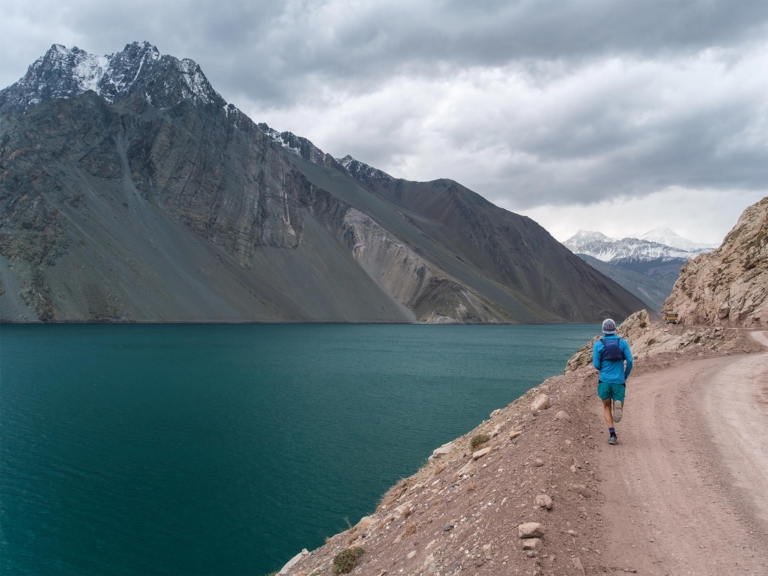
Chile has more than 1,200 large, poorly protected rivers. A group of environmental organizations has a proposal to prevent their disappearance.