


Worn Wear

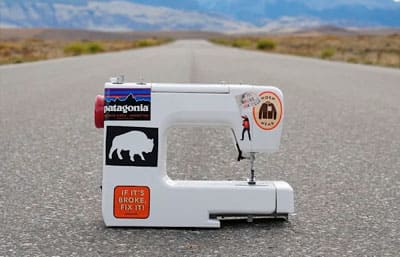
We repair your Patagonia garments so you can continue using them.
We are in this business to save our home, planet Earth.


The Post. Repair Shop.
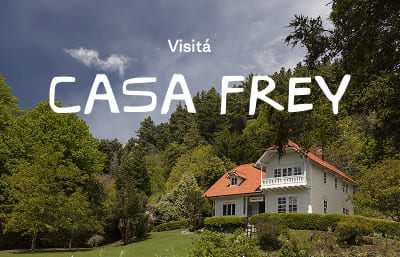
We opened Casa Frey, a space for the community in Bariloche.
Where are we?
Bustillo Avenue, km 1.5 - Bariloche, Río Negro


Everything we do has an impact on the planet.


Our philosophy
Honestly: have you ever thrown something away when it could have easily been fixed?
The answer is probably yes.
And have you ever wanted to repair a garment but didn't know where to start?
The answer is probably yes as well.
It's understandable.
Our society prioritizes convenience and speed of disposal over the care, conservation, and repair of objects, often without any idea of what this implies for the environment and the planet.
The situation definitely needs to change. But how?
We don't claim to have all the answers, nor can we solve all these problems, but we can do our part, add our grain of sand, so to speak.
That's why we not only manufacture long-lasting products (seriously, any Patagonia garment has a lifespan of more than 10 years) but we also make repairing them as easy as, or even easier than, throwing them away.
All you have to do is visit one of our stores (any one, the one closest to you), or send us your clothes by mail.
What does this mean?
It doesn't matter where you are in Argentina. Wherever you are, you can send us your Patagonia products so our team of repairers, ready to get to work, can begin the repair process .
However, this clarification is necessary: the repairs are functional, not aesthetic. This means that, while we try to use materials that best match your garments, it won't always be possible to achieve an exact match. Therefore, the repairs may be visible (a thread of a different color, a different button, a fun patch).
However, that doesn't have to be a negative thing: a repaired garment tells a story, an anecdote, an experience; a visible scar on your clothes marks the beginning of a new chapter, an extra life for your team.
We should also clarify that not all damage can be repaired. But don't worry! If this happens, we'll try to find an alternative. Perhaps you could leave your garment for recycling and exchange it for one we have repaired.
When we mend a garment, replace a buckle, or sew on a button, we are mending our relationship with the things we own.
We know that repaired items are never as good as new again, but we believe that choosing repair is a new way to connect with the planet.
Always repair.
Replace only when it can no longer be repaired.
Zofia Reych
While climbing can be an end in itself, I am fascinated by using it to have a positive impact on the world.
When I moved to Fontainebleau, France, my only concern was improving my athletic performance, and I didn't foresee how much more could be gained through bouldering, living closer to nature, and becoming part of the local community. I'm a naturally solitary person. Our individualistic culture doesn't encourage meaningful connections, and climbing can be an antidote to that. I want access to these experiences to be open to everyone.

Climbing is also a surprisingly accurate lens through which to analyze society: the impetus to create the Women's Boulder Festival arose from witnessing the lack of diversity among the crags of Fontainebleau. Creating a welcoming environment for different genders, ethnicities, abilities, and so on is crucial for our survival on this planet, as numerous studies demonstrate. Therefore, making my small contribution by diversifying climbing seems like a sensible idea, especially since opportunities related to outdoor activities are still limited to a fortunate few.
Just into my 30s, I was diagnosed with autism and, shortly after, ADHD. As the festival director, I want to show myself as I am, unedited: a neurodiverse, non-binary person with a history of mental health challenges, and help normalize the many valid and beautiful ways of being human.
From indoor wall competitions to campaigns to protect local climbing areas, climbing is so much more than one thing, and there's no single right way to do it. At the same time, I believe there's always room for improvement and immense value in reflecting on it. An intersectional approach to the complexities of climbing was the inspiration for my book, Born to Climb: From Rock Climbing Pioneers to Olympic Athletes. It's a blend of classic adventure stories, a bit of nerdy social science inspiration, and an attempt at fair representation, which just so happens to describe my interests pretty well.
Photo: Zofia Reych warms up on one of the many boulders scattered throughout the Fontainebleau forest. Once the domain of royalty, it is now a nature reserve with numerous caves and Paleolithic rock carvings, located nearly 50 kilometers from Paris, France. CRISTINA BAUSSAN.
Brandon Belcher
My first encounter with solidarity and mutual aid organizations was by chance. I had a small group of friends with strong ties to activist groups, and during the summer of 2020, we organized some protests throughout Atlanta. By the end of the summer, we were exhausted, but we discovered that supporting solidarity groups was a great way to continue our previous efforts.
“Mutual aid” is when members of a community come together to support one another and work toward common goals. It’s actually quite similar to rock climbing: climbers often rely on shared knowledge and experience to tackle challenging routes and create a sense of connection and belonging. Both require trust, cooperation, community, and a willingness to take risks for the benefit of oneself and others.

Legislation is obviously a high-impact way for communities to achieve the changes they need, but legislative procedures take a long time to take effect and sometimes don't even benefit the people they are intended to help. Climbers have created local climbing organizations, which have a much better understanding of their communities' immediate needs and can help with issues that require a faster response and firsthand knowledge. Similarly, mutual aid organizations offer quick and effective assistance to those who need it, without having to wait for an external authority to determine whether the issues warrant their attention. Mutual aid organizations can also provide additional or specialized assistance to those who are often overlooked, such as people marginalized because of their ethnicity, gender, or economic status.
I am physically close to the communities I want to help. However, my relationship and involvement may not be as established as those of someone leading an organization. Therefore, I offer financial support or supplies (such as food donations, blankets and warm clothing during the winter months, awnings and tents, etc.), leaving the charitable work to an organization or cause that has a greater understanding of the work that needs to be done and how to do it.
Photo: Brandon Belcher trusts the process. After years of climbing, he now approaches each new project with the confidence to try, fail, try again, and fail once more, before finally reaching the top. Chattanooga, Tennessee. DREW SMITH
Eric Bissell
When I was learning to climb, I idealized Yosemite and the slow, almost methodical progression of skills it offered. From the most epic big walls to the technical granite boulders, Yosemite provided the path I aspired to follow, from complete novice to granite expert. Within a few years of becoming obsessed with Yosemite, I landed a job there as a climbing ranger and worked in the park for eight seasons. During those years, I had my own big-wall adventures and repeated some iconic boulders. But I also learned that however unique our climbing history may seem, our impacts never are. Watching thousands of climbers follow a similar trajectory each year made it clear how important it is to consider our individual impacts as part of a larger story of climbers' impact on a landscape.

As climbing rangers, we relied on education—both cautionary and inspirational—to encourage people to have less of an impact. To better achieve that goal, we developed a volunteer program, the Climbing Guardians, which has since spread across the country and formed lasting community partnerships between land managers and the climbing community. In addition to the important work of building trails and cleaning up trash, the Climbing Guardians facilitated ongoing communication between the two groups. Although I no longer work in Yosemite, climbing remains a source of perspective in my life, helping me consider what it means to be an individual within a community and what it means to be a guardian of the natural world. To the extent possible, I try to bring this perspective to the visual storytelling I do now.
Photo: With Yosemite Falls roaring behind him, Eric Bissel climbs the tenth pitch of Lost Arrow Spire Direct VI (5.12c A0) while Jane Jackson belays him. Yosemite National Park, California. DREW SMITH
